Published: 2025-12-16 00:00
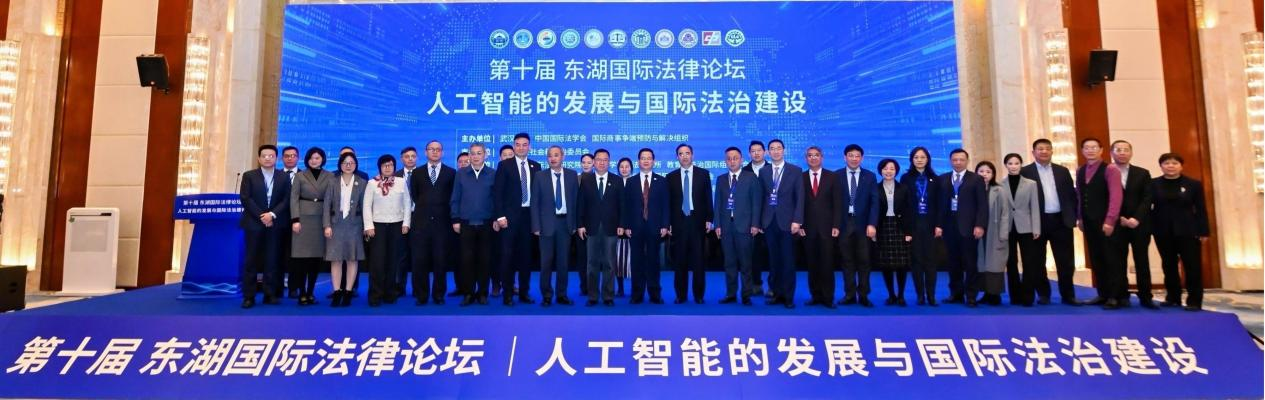
Wuhan, December 13, 2025, - The 10th East Lake International Law Forum was successfully held in Wuhan, co-hosted by Wuhan University, the Chinese Society of International Law, and the International Commercial Dispute Prevention and Settlement Organization (hereinafter referred to as ICDPASO).
This year's forum focused on the theme of artificial intelligence development and the construction of international rule of law. The opening ceremony featured addresses by Mr. ZHU Kongjun, Secretary of the Party Committee of Wuhan University; Mr. LIU Jiaqiang, Vice Chairman of the Central Committee of the Revolutionary Committee of the Chinese Kuomintang; Mr. Jason CHIA, Secretary-General of ICDPASO; Mr. LI Zhangbo, Director of the Wuhan Arbitration Commission Office; and Mr. HUANG Jin, President of the Chinese Society of International Law.
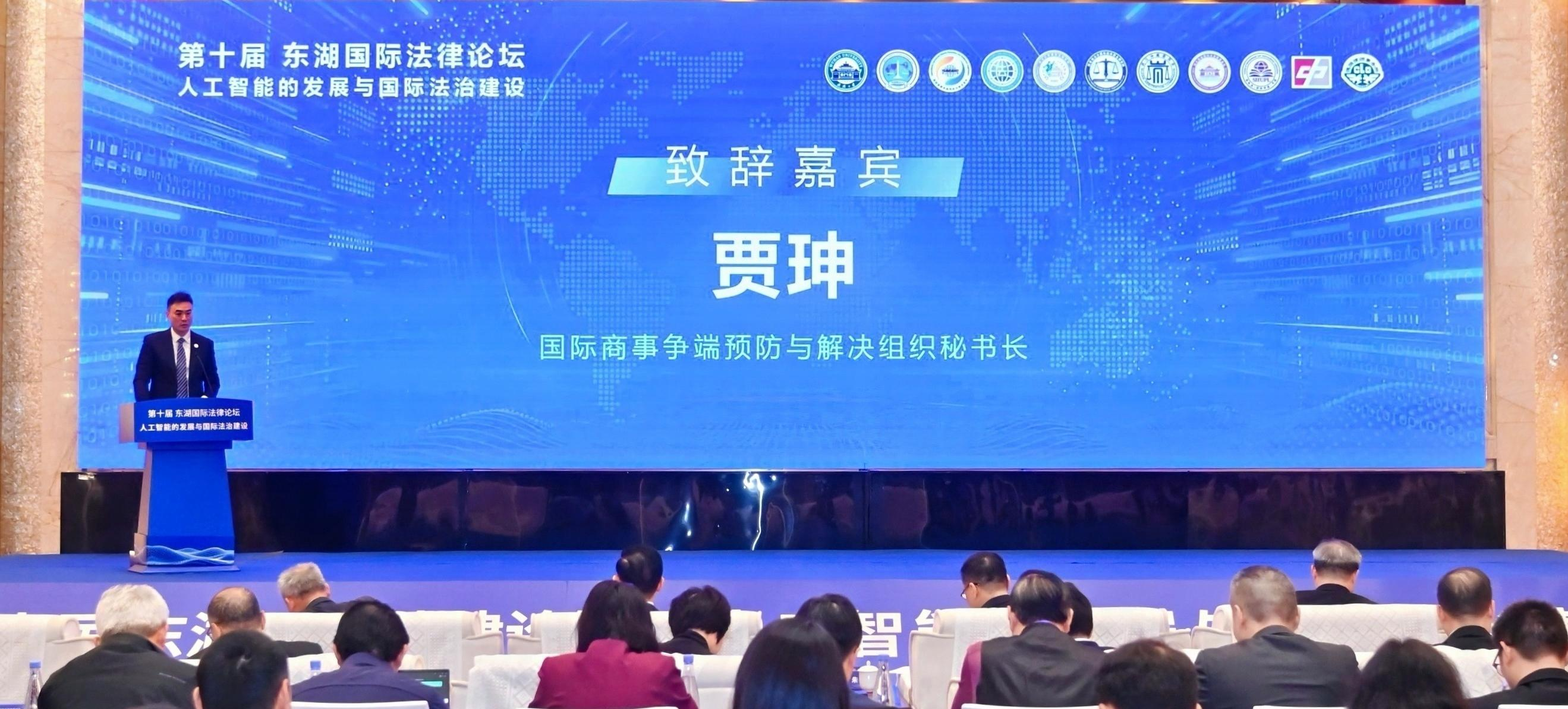
In his address, Secretary-General Mr. Jason CHIA pointed out that ICDPASO consistently upholds the philosophy of "prioritizing a shared future, anchoring efforts in international rule of law, and harnessing technology for good as a driving force." He emphasized ICDPASO's commitment to promoting the development of international rule of law in the context of rapid AI advancement. He stated that ICDPASO is willing to join hands with global partners, using the rule of law as the foundation and technology as an enabler, to jointly steer the healthy development of artificial intelligence on a fair, inclusive, and sustainable path, contributing legal wisdom to building a community with a shared future for mankind.
During the keynote speeches, six distinguished guests—Mr. SUN Jin, Deputy Secretary-General of the International Mediation Court; Mr. LUO Guoqiang, Deputy Chief Judge of the Fourth Civil Division of the Supreme People's Court; Professor SHEN Weixing from Tsinghua University Law School; Professor HUANG Zhixiong from Wuhan University Law School; Professor DU Huanfang, Dean of the Institute of Foreign-Related Rule of Law at Renmin University of China; and Professor WANG Yanling from South China Normal University Law School—delved into the multidimensional impact of artificial intelligence on international rule of law. They provided insights from perspectives including international dispute resolution, interaction between judicial practices, legislative value orientations, the shaping of international law, extraterritorial effect of laws, and global judicial intelligence.
The forum featured two panel discussions, respectively centered on the themes of "Building an International Law Rule System for the AI Era" and "AI and the New International Civil and Commercial Order." Experts from research institutions, international think tanks, law firms, courts, government departments, and universities engaged in in-depth dialogues. Discussions covered common issues in AI governance, compliance challenges posed by EU AI regulations for Chinese intelligent manufacturing, AI-driven internet platform governance, the application of AI in regional commercial dispute resolution, and the construction of rules for cross-border data governance. These sessions comprehensively explored diverse pathways for building an international law rule system in the age of artificial intelligence.
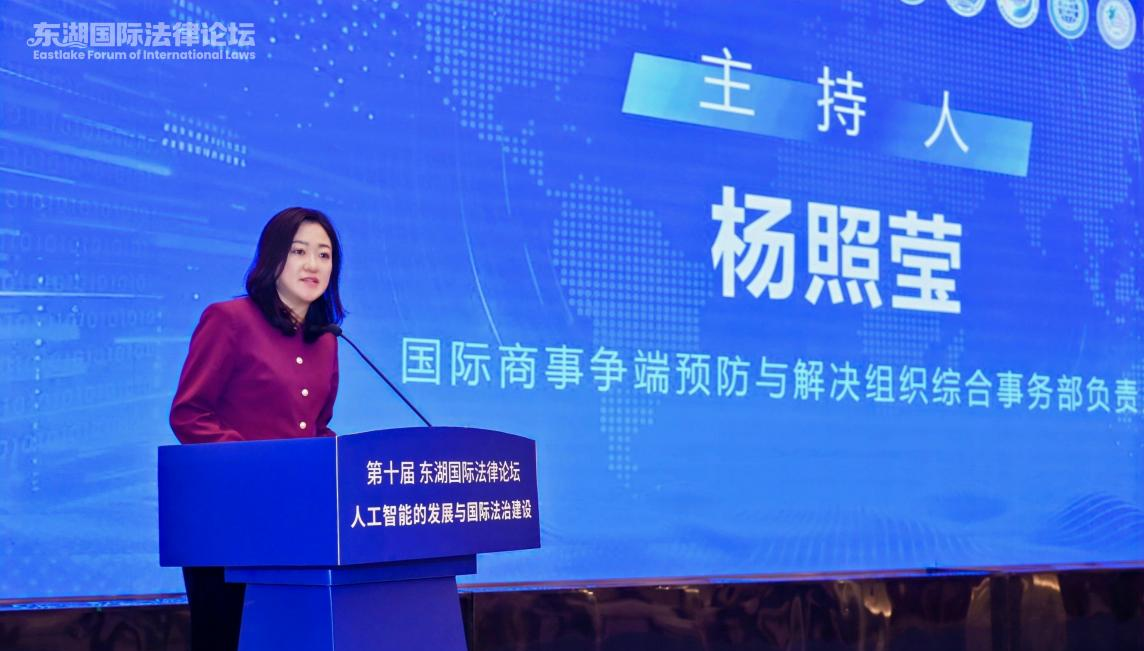
After a decade of dedicated cultivation and accumulation, the East Lake International Law Forum has become a solid bridge connecting China with the global legal community and an important bond for consolidating consensus on international governance. Standing at a new starting point, the forum will remain firmly rooted in international rule of law, with "technology for good" as its core engine. It will continue to delve into governance practices and rule innovation in emerging frontier fields such as artificial intelligence, injecting enduring momentum into the transformation of the global governance system. ICDPASO looks forward to joining hands with colleagues worldwide to write a new chapter in legal cooperation, advancing together towards a promising future empowered by technology and safeguarded by rules.